
Audio By Carbonatix
On a warm March afternoon inside a hotel ballroom in Doral, charter school operators mingled with education entrepreneurs, conservative activists, Republican donors, and parents eager to hear what Florida’s education system might look like after Ron DeSantis.
The event was billed as an education roundtable for gubernatorial candidate Byron Donalds. But as the discussion unfolded, it became clear that this wasn’t simply another campaign stop.
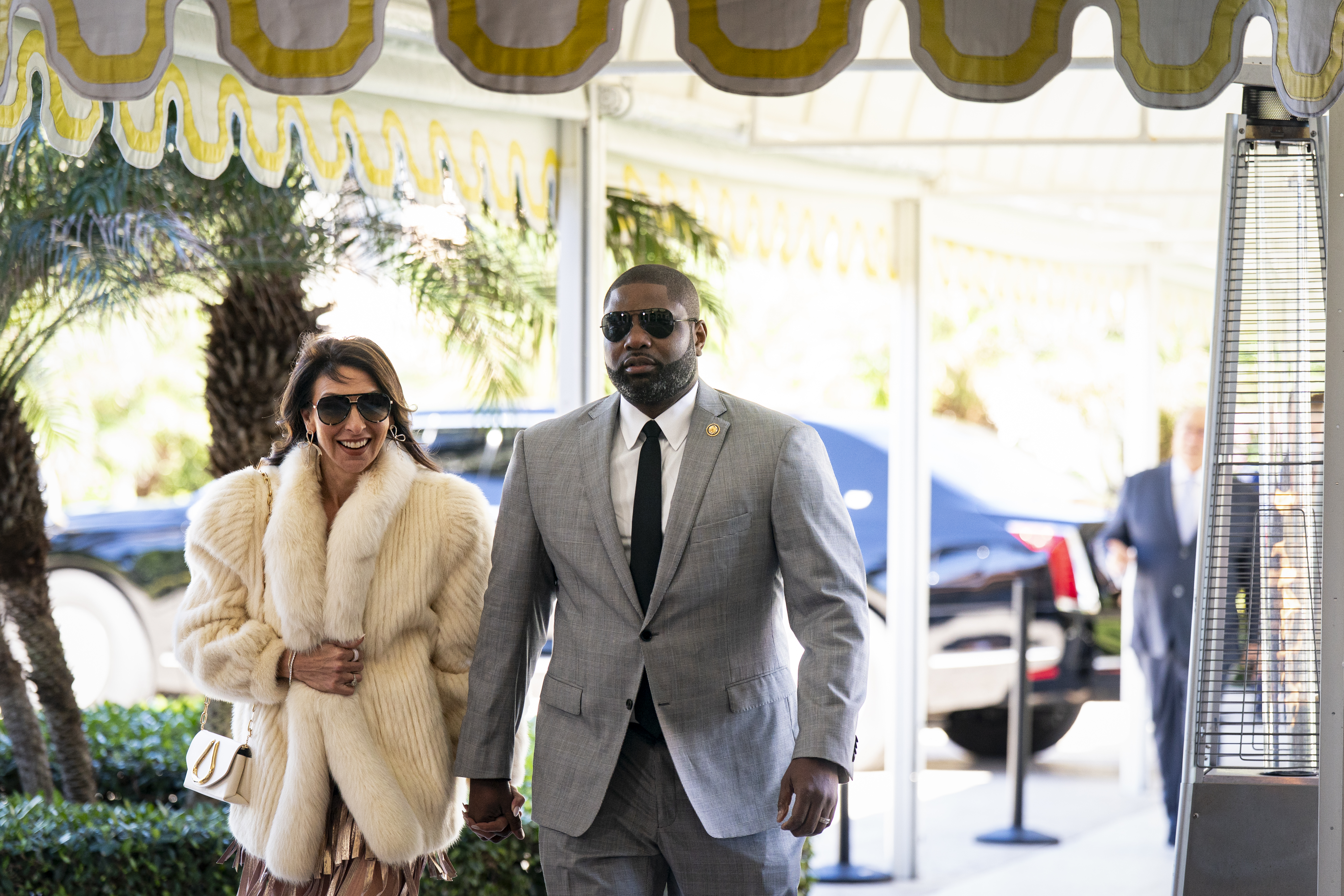
Standing beside Donalds wasn’t a traditional political spouse. It was Erika Donalds, one of the most influential figures in Florida’s school choice movement and a longtime advocate for expanding charter schools, education savings accounts, and market-based education reforms.
For nearly two hours, the couple outlined what they described as the next chapter of Florida education.
Their vision went well beyond preserving Florida’s existing school choice programs. They proposed replacing the state’s A-through-F school grading system with individualized learning plans tailored to every student, expanding apprenticeships and workforce training, embracing artificial intelligence and education technology, and opening the education system to greater private-sector participation.
Repeatedly, they framed parents as consumers and schools as competitors in an educational marketplace. Then Erika Donalds delivered the line that captured the philosophy underpinning the entire event.
“Profit is not going to be a bad word when it comes to the education industry.”
When asked about the comment, Erika wrote in an email to New Times, “There’s nothing wrong with earning a profit when you’re delivering an education that parents freely choose and that produces excellent results. That’s how we invite America’s best innovators to bring their talents to the education space, just as competition drives quality and access in every other part of our lives.”
For supporters, the remark reflected a belief that competition drives innovation and that families—not school districts—should decide where education dollars go. For critics, it reinforced concerns that Florida is steadily transforming public education into a taxpayer-funded marketplace where private companies profit from services once provided by public schools.
Either way, the message would have sounded remarkably familiar to one man watching from Pennsylvania.
Jeff Yass, the billionaire co-founder of Susquehanna International Group, has spent years financing politicians, advocacy groups, and ballot campaigns built around exactly that philosophy.
Although Yass is perhaps best known today as one of the world’s richest investors and one of the largest outside shareholders in ByteDance, the Chinese technology company that owns TikTok, he has repeatedly said that school choice—not technology—is the political cause that motivates most of his giving.
Campaign finance records show he has become Byron Donalds’ largest political benefactor, contributing $7.5 million to Friends of Byron Donalds, the political committee supporting the congressman’s campaign for governor.
Asked for a previous story about Yass’ $7.5 million in contributions to Byron Donalds’ gubernatorial campaign, a spokesperson for Susquehanna replied in an email: “Byron Donalds is a school choice warrior.”
When asked how closely her education goals align with Yass’ vision for expanding school choice, Erika said, “Our success in Florida has drawn attention from across the country, and I’m regularly asked to advise legislators, activists, and governors on how to achieve the scale and results we’ve built here. This movement is large and diverse, and I work with almost anyone – groups, philanthropists, and activists alike – who shares my vision of education freedom for every family in America.”
Yass did not respond to New Times’ emailed request for additional comment.
More than campaign rhetoric
The Donalds family’s connection to Florida’s school choice movement predates Byron Donalds’ gubernatorial campaign by years.
Erika Donalds founded the nonprofit Optima Foundation, which helps establish charter schools throughout Florida and other states. She also serves as CEO of OptimaEd and Optima Management Solutions, private companies that provide curriculum development, administrative services, and operational management for charter schools.
According to reporting by the Miami Herald, those companies have received millions of dollars through taxpayer-funded contracts tied to Florida’s expanding charter school system.
In response to a question about whether Erika had discussed her education agenda with Yass before or after he had become Byron’s largest donor, Erika wrote, “I’ve worked with the Center for Education Reform on national education policy for more than a decade, well before CER ever partnered with Jeff and Janine Yass on the Yass Prize. OptimaEd was a Yass Prize semifinalist in 2023, and I met Jeff and Janine through that recognition, but the alignment on education policy existed long before we ever met.
“My convictions were formed through my own experience as a mom, school board member, and charter school founder, and I have never been shy about sharing my life mission with anyone who will listen.”
The arrangement between Erika’s companies, taxpayer-funded contracts, and Byron’s gubernatorial run has drawn scrutiny from ethics watchdogs and public education advocates, who argue that a governor whose spouse operates businesses serving charter schools could face difficult questions about conflicts of interest.
Erika Donalds has rejected that criticism.
“I believe that people should be compensated for their services, and I don’t think I should be treated any differently,” she told the Herald.
The Donalds campaign has similarly argued that her work promoting school choice and managing charter schools represents a longstanding professional career rather than a conflict.
Byron Donalds did not respond to New Times’ emailed request for comment.
Why Byron Donalds?
Jeff Yass’ investment becomes easier to understand when viewed through the broader evolution of school choice politics. For decades, advocates focused on expanding charter schools, tax-credit scholarships, and voucher programs state by state. In Florida, many of those battles have already been won.
In 2023, Gov. Ron DeSantis signed legislation making every K-12 student eligible for taxpayer-funded education savings accounts, creating one of the nation’s most expansive school choice systems. Today, more than half a million Florida students receive some form of school choice scholarship, and lawmakers continue to debate how those programs should evolve.
The question facing Florida Republicans the same one that confronted Texas just a few years ago. What’s next after school choice?
Despite years of pressure from Texas Gov. Greg Abbott, the Republican-controlled Legislature repeatedly failed to approve a statewide school voucher program. A bloc of mostly rural Republicans joined Democrats in opposing the proposal, arguing it would undermine public schools in their districts. Rather than abandon the effort, Abbott and national school choice groups escalated the political fight.
Yass became one of the movement’s biggest financial backers, according to the Washington Post.
Through organizations he supports, including the American Federation for Children and affiliated political committees, millions of dollars flowed into Republican primary races targeting incumbents who opposed voucher legislation. Dozens of anti-voucher Republicans either retired, lost their primaries, or were replaced by candidates who backed education savings accounts.
When the Legislature reconvened, the political math had changed. Texas approved a universal education savings account program in what supporters hailed as the biggest school choice victory in the state’s history.
Yass later pointed to Texas as proof that sustained political spending can reshape education policy. Writing after the bill’s passage, he praised Abbott for supporting challengers against Republicans who opposed school choice and argued that donors should “double down” on candidates willing to advance education freedom. He specifically highlighted Byron Donalds among a group of gubernatorial candidates he was proud to support.
Florida, unlike Texas, has already enacted universal school choice. Byron and Erika Donalds have made clear they see that achievement as the beginning of education reform.
Rather than treating vouchers as the culmination of the movement, the couple has proposed using them as the foundation for a broader restructuring of Florida’s education system, one that relies more heavily on private providers, individualized learning plans, education technology, apprenticeships, workforce credentialing, and greater competition among education providers.
That vision closely mirrors the philosophy Yass has spent years financing across the country. His record suggests he isn’t simply funding Republicans. He’s investing in candidates who share a specific vision of education—one driven by parental choice, market competition, and the expansion of the role of private organizations in publicly funded education.
With $7.5 million invested in Byron Donalds’ campaign committee, Florida may now represent Yass’ next major test.